Posts

Awareness and Knowledge of HIV and H1N1
Image
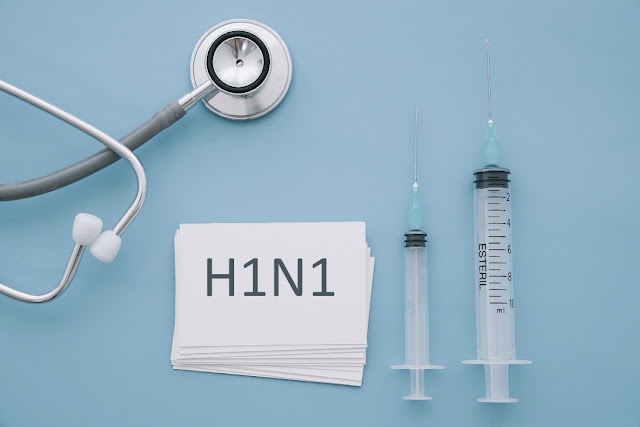
Drug Development – Lessons learnt from HIV and H1N1: The humankind is constantly reminded of the threat of newly emerging infectious diseases – the declaration by the World Health Organization (WHO) about the global H1N1 flu pandemic in June 2009 is just one example. By the time Dr. Margaret Chan, Director-General of WHO made the announcement, pandemic level of H1N1 had already reached the highest level (level six) and the numbers of confirmed cases were over 30,000. The world governments and health agencies need to be prepared for responding to such public health challenges by activating the pandemic plans and doing everything necessary to keep the people safe. Scientific expertise across multiple disciplines needs to be used to combat the threat posed by such emerging infectious diseases. The term emergent disease includes any disease which is previously unknown; increase in incidence of a previously known disease; disease caused by intentional dissemination of bio...

How to make Interesting GMP training?

Image
Very frequently we will be seeing that, someone in a biopharma company will say “it’s time to think about GMP training”. This statement will generally be received with little exuberance from those who get to know however even so a plan will be in place to conduct GMP training over the next 4 or 5 months or so. On the training day the majority of the resources will present with evenly low levels of enthusiasm as the GMP session begins. “Well let’s start” the GMP trainer will say, as the participants think “well let’s get this over and done with” as they pay close attention to the focus area of this time training – which is generally what they did so poorly wrongly last time! In point of fact, the same could be conveyed for most training departments. They covetously guard their turf and present average, cursory training. Now this might not be incisively what happens in your company however some components of the above are the correct. This does implore some really import...

Why Competitive Intelligence is required for the Industry?

Image
In today’s fast changing / global business environment, competitive intelligence strategy (CIS) is playing a favourable role at every stage in the organization and has significance presence in the pharmaceutical industry. Competitive Intelligence (CI), is the process of compiling, analyzing intelligence focusing on competitor products, customers, market environment, and really a efficient method in mapping or knowing the strategy of a competitor on products/services. In simple terms “CI” is a process which gives perceptivities into what might happen in the near future. This process involves stages from data to information to intelligence. Intelligence differs from data and information since it requires some form of analysis. The purpose of this analysis is to derive some meaning from the gathered data and information. The CI analysis, filtering of the data and information helps one to act on it and understand the options, giving an opportunity to make way forward decisions. Co...

What to do if a Nuclear Disaster Is Imminent

Image
Surviving Nuclear Disasters: The power of science will never be able to overcome the power of nature and Natural disaster time and again reminds us of the fact that there are many things beyond human control and imagination, the recent earthquake and following chain of events in Japan has showed us how limited are our preparations for a disaster of this scale and magnitude. The most worrying thing that concerns us all is the nuclear disaster and unfolding events, where science and technology goes out of control resulting in a major disaster. Governments and communities at all levels are planning for the survival in the event of a nuclear disaster. But the survival of individuals also will depend upon the preparation that each person makes. Persons ready to take the right action before and following a nuclear disaster will increase their chances of survival. This article describes what is to be done before and following a nuclear attack or a disaster. You can greatly ...

Tetrathiomolybdate, a copper-sequestering drug, effective against wilson disease

Image
Tetrathiomolybdate – A copper-sequestering drug: A study has revealed that Tetrathiomolybdate, a copper-sequestering drug, plays an important role in providing a treatment for Wilson disease, which is caused by an over accumulation of copper and metastatic cancers. Small info is available, however is known about how the drug works at the molecular level. A fresh research study conducted and guided by the Northwestern University researchers now has provided a priceless clue i.e the three-dimensional structure of TM bound to copper loaded metallochaperones. The tetrathiomolybdate sequester the chaperone and its bound copper, forbidding both from carrying out their normal functions in the cell. For those patients suffering from Wilson disease and other cancers whose primary growth is helped by copper-dependent angiogenesis, this is very promising. The knowledge gain from the above research provides a new direction and also opens the door for the development of new class...

Human Resource scenario in Indian Healthcare

Image
Employment Trends in Healthcare: Over last 12 months hiring in various industries slowed down significantly except healthcare. A survey initiated in Q4 2009 to analyse the human resource scenario in Indian healthcare domains, conducted by  harneedi.com . Skills in Demand: With the consistent upward trend in the healthcare Industry there is huge demand for Specialist doctors and experienced Nurses in the respective specialties. Survey respondents were allowed multiple answers. Average hiring for a single hospital per year is around 50 from the different departments and specialties. When asked which overall category was experiencing the most growth within their Hospitals, the top reply was Gynecology, with 23% of the response. Cardiology followed at 15% and Pediatrician was third, with 13% of the response. Click here to Continue Reading For more updates visit  HarNeedi.com 

Brain Activity and Functional Connectivity Associated with Hypnosis

Image
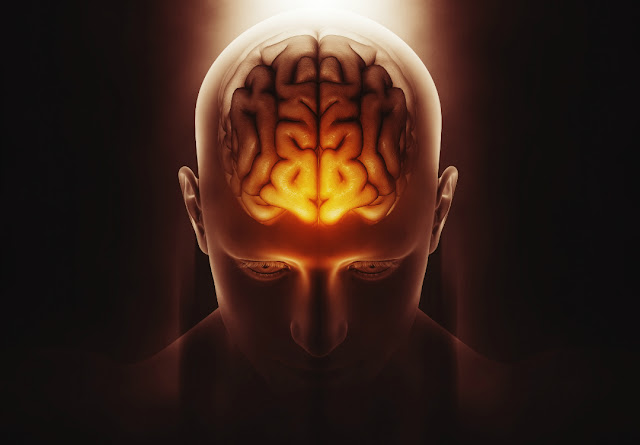
Hypnosis has proven clinical utility, yet changes in brain activity underlying the hypnotic state have not yet been fully identified. Hypnosis, or trance, is an altered state of mind in which a person is highly responsive to suggestion. While in trance, a hypnotic subject is focused entirely on certain ideas to the exclusion of all others.Previous research suggests that hypnosis is associated with decreased default mode network (DMN) activity and that high hypnotizability is associated with greater functional connectivity between the executive control network (ECN) and the salience network (SN). We used functional magnetic resonance imaging to investigate activity and functional connectivity among these three networks in hypnosis. However, in recent years, advances in cognitive science have found trance to be a natural state, grounded in the principle workings of the mind. When the brain is affected by hypnosis — a trance-like state with focused attention and reduced periphe...